
Retatrutide (LY3437943) is a first-in-class triple agonist targeting GIP, GLP-1, and glucagon receptors, showing remarkable efficacy in clinical trials for weight management and metabolic health. If you’re exploring advanced peptide options like Kylo Peptides GLP-3 RT as part of a holistic wellness strategy, understanding how this pharmaceutical innovation fits into a broader sustainable lifestyle matters. At our core, we believe health decisions should align with your values, including the environment you create at home to support lasting change.
The connection between medical advancements and sustainable living isn’t immediately obvious, yet they share common ground: both require intentional choices that honor your body and the planet. When considering therapies for metabolic health, you’re not just researching a medication. You’re thinking about how wellness integrates into your daily routines, the spaces where you prepare nourishing meals, and the calm, toxin-free environments that support metabolic health naturally.
This guide bridges pharmaceutical science with the sustainable home practices our community values. We’ll explore what makes retatrutide unique among weight-loss treatments, then pivot to practical ways your living space can reinforce any health journey you choose. From circadian-supporting lighting that optimizes hormone function to kitchens designed for whole-food preparation, your home becomes a partner in wellness. Because real, lasting change happens when cutting-edge science meets thoughtful, eco-conscious living that feels like home.
What Is Retatrutide and Why Is Everyone Talking About It?
You’ve likely heard whispers about Retatrutide in health podcasts, seen it mentioned in wellness newsletters, or watched friends navigate the world of weight management medications. But what exactly is this pharmaceutical that’s capturing so much attention?
Retatrutide is a triple agonist medication, which means it activates three different hormone receptors in your body simultaneously. Think of it as working three complementary jobs at once rather than just one. While older medications like semaglutide target one or two pathways, Retatrutide engages with GIP, GLP-1, and glucagon receptors all together, creating a more comprehensive metabolic response.
To understand what makes this approach different, here are the key players:
- Triple Agonist
- A medication that activates three distinct hormone receptors simultaneously to influence metabolism, appetite, and energy use throughout the body.
- GIP (Glucose-dependent Insulinotropic Polypeptide)
- A hormone that helps regulate insulin secretion and influences how your body stores fat, particularly after eating.
- GLP-1 (Glucagon-like Peptide-1)
- A hormone that slows digestion, reduces appetite, and helps control blood sugar levels by signaling fullness to your brain.
- Glucagon Receptors
- Cellular pathways that, when activated, prompt your body to break down stored fat and glucose for energy, essentially reversing storage mode.
The excitement around Retatrutide stems from clinical trial results showing significant weight reduction compared to existing options. Where earlier medications work primarily on appetite suppression, this triple approach addresses multiple metabolic pathways that influence how we store and use energy.
For those of us committed to thoughtful, informed choices about our bodies, understanding these mechanisms matters. It’s not magic or a shortcut. It’s pharmaceutical science working with your body’s existing systems, and knowing how it functions helps you make decisions aligned with your values and health goals.
The Environmental Cost of Pharmaceutical Production
When you pick up any medication, whether it’s an innovative treatment like Retatrutide or a simple antibiotic, you’re holding the end result of an incredibly resource-intensive process. Understanding this isn’t about creating guilt, but rather expanding our awareness of where our health choices intersect with environmental impact.
Pharmaceutical manufacturing demands staggering amounts of water and energy. A single kilogram of active pharmaceutical ingredient can require anywhere from hundreds to thousands of liters of water and solvents, much of which becomes chemical waste. The precision needed to create compounds like Retatrutide’s triple agonist formula means multiple purification steps, each generating solvent waste that requires careful treatment. These life-cycle impacts of production extend far beyond the factory walls.
Temperature-controlled shipping adds another layer. Most biologics and sensitive compounds need refrigeration from manufacturing facility to pharmacy shelf, creating significant carbon emissions through cold chain logistics. Think about the fossil fuels powering those refrigerated trucks and planes, maintaining precise temperatures across thousands of miles.
Then there’s the packaging challenge. Every medication arrives wrapped in layers of plastic, aluminum foil, and cardboard, materials chosen for safety and stability, but creating waste nonetheless. While we can recycle a glass jar or compost vegetable scraps, pharmaceutical packaging often heads straight to landfills due to contamination concerns.
The chemical byproducts themselves present complex problems. Trace amounts of medications eventually enter water systems through human excretion and improper disposal, affecting aquatic ecosystems in ways scientists are still working to fully understand. It’s a reminder that our bodies don’t exist in isolation from the environment around us.
Does this mean we should refuse medications we genuinely need? Absolutely not. But acknowledging these realities helps us make more informed choices. When you need pharmaceutical intervention, you can balance that decision by intensifying sustainable practices in other areas of your life. You can advocate for pharmaceutical companies to adopt greener manufacturing processes. You can properly dispose of unused medications instead of flushing them.
This awareness isn’t about perfection. It’s about understanding the full picture so your health decisions align with your values wherever possible.

Creating a Holistic Wellness Environment at Home
Kitchen Spaces That Support Mindful Eating
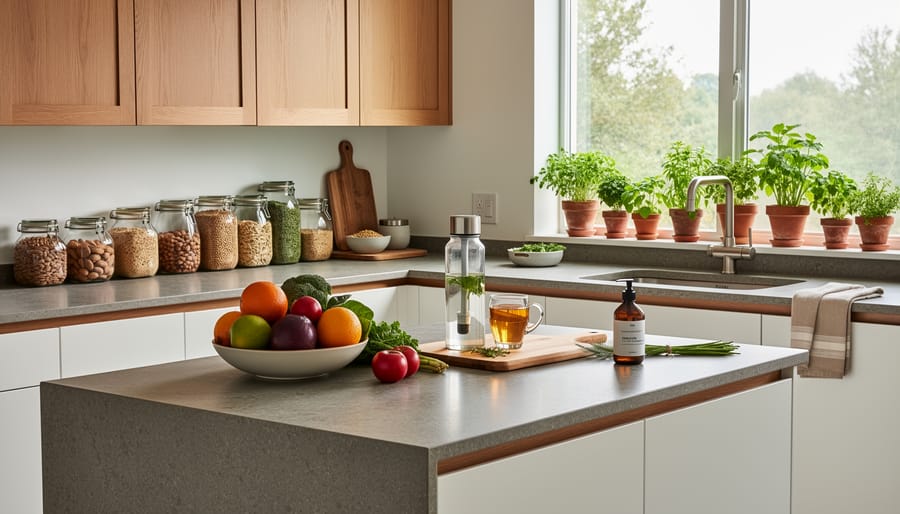
Your kitchen can become a powerful ally in supporting healthier eating patterns, regardless of what medical interventions you might be exploring. Start by clearing counter space and bringing your most-used whole food ingredients to eye level, when prep is easier, you’re more likely to cook from scratch. Open shelving made from reclaimed wood not only reduces the need for new materials but also keeps healthy staples visible and within reach.
Consider investing in handcrafted kitchen accessories that make cooking feel like a pleasure rather than a chore. A beautiful wooden cutting board from a local artisan or hand-thrown ceramic bowls can transform routine meal prep into something you look forward to. These pieces typically outlast mass-produced alternatives by decades, reducing waste while adding warmth to your space.
Lighting matters more than you might think. Position your prep area near a window if possible, or install adjustable lighting that makes vegetables look vibrant and appealing. Create a dedicated herb garden on your windowsill using repurposed containers, the act of snipping fresh basil or thyme connects you to your food in a way that supports more intentional eating.
Think about your dining setup too. A simple table made from sustainably harvested wood, paired with unbleached linen napkins, creates an atmosphere that encourages you to slow down and actually taste your food rather than eating on autopilot.
Movement-Friendly Living Spaces
Creating a living room that naturally invites movement transforms your daily routine without requiring a gym membership or special equipment. Start by arranging furniture to leave open floor space in the center of the room, enough room to stretch, practice yoga, or do bodyweight exercises while natural light streams through your windows. Choose a sustainably sourced coffee table on casters that rolls aside easily when you need floor space, then returns to anchor your seating area for evening relaxation.
Multi-functional pieces work beautifully here. A storage ottoman crafted from reclaimed wood serves triple duty: seating for guests, a surface for stretching exercises, and hidden storage for yoga blocks or resistance bands. Position your sofa away from walls to create walking paths that encourage you to move around your space rather than taking the shortest route everywhere.
Lighting matters more than you might think for staying active at home. Pair your movement-friendly layout with thoughtful eco-home lighting that mimics natural rhythms, keeping you energized during the day and promoting restful evenings. Install adjustable fixtures made from bamboo or recycled materials that brighten workout corners in the morning and create ambient warmth for gentle evening stretches.
Consider furniture height variations too. A standing desk made from FSC-certified wood near a window encourages you to shift positions throughout your workday, while floor cushions covered in organic cotton invite you down for hip-opening stretches during phone calls.
Balancing Modern Medicine with Earth-Conscious Values

The truth is, living sustainably doesn’t mean rejecting modern medicine when you genuinely need it. If you’re considering medications like Retatrutide for weight management, that choice doesn’t negate your commitment to the planet. What matters is how you approach the bigger picture of your life.
Think of it as a balance sheet rather than an all-or-nothing equation. Yes, pharmaceutical production carries environmental costs we explored earlier. But your health matters too, and chronic conditions left untreated create their own cascading effects on quality of life, healthcare resource use, and your ability to engage meaningfully with the world around you.
The key is making intentional trade-offs. If a medication improves your health significantly, consider where else in your life you can deepen your environmental commitment. Maybe you finally invest in that compost system, switch to renewable energy for your home, or support regenerative agriculture through your food choices. These aren’t guilt-driven offsets but conscious decisions about where your impact matters most.
Many of our community members have found peace in this approach. They choose necessary medical interventions while simultaneously reducing waste in other areas, supporting local artisans who use reclaimed materials, or advocating for pharmaceutical companies to adopt greener manufacturing practices. Your voice as an environmentally conscious consumer carries weight with these industries.
Remember that sustainable living is a practice, not perfection. Some seasons of life demand different choices. What remains constant is your intention to live thoughtfully, treating both your body and the earth with the respect they deserve. That mindset itself creates ripples of positive change.
Small Changes That Make a Big Impact on Your Wellness Journey
Whether you’re exploring new health interventions or simply recommitting to daily wellness habits, small sustainable shifts in your home environment create lasting change. These aren’t overwhelming overhauls, they’re gentle adjustments that honor both your body and the planet.
Start by examining the everyday items that shape your wellness routine. That disposable plastic water bottle or synthetic yoga mat? They’re sending subtle messages about what we value. When we choose tools that reflect our environmental commitments, we reinforce our intentions with every use.
Here’s how to build a foundation of sustainable wellness practices that actually stick:
- Switch to a quality reusable water bottle made from glass or stainless steel. Proper hydration supports every metabolic process, and a beautiful bottle you love using makes it easier to drink enough water throughout the day.
- Create a windowsill herb garden using reclaimed containers. Fresh basil, cilantro, and parsley transform simple meals into nourishing experiences while connecting you to the growing process.
- Source at least three staple foods from local farmers or community markets. Seasonal produce picked at peak ripeness offers better nutrition and dramatically reduces transportation emissions.
- Replace synthetic workout gear and loungewear with natural textiles like organic cotton or bamboo. These breathable fabrics feel better against your skin and biodegrade naturally at end of life.
The magic happens when these choices become automatic. You reach for the glass water bottle without thinking. Your hands instinctively snip fresh herbs for dinner. These rituals weave wellness into the fabric of your day rather than treating it as a separate obligation.
Consider partnering with local artisans for your wellness tools. Hand-thrown ceramic dishes slow down mealtimes naturally. A locally crafted wooden cutting board makes vegetable prep feel less like a chore and more like a meditative practice. These pieces carry the energy of their makers and typically last decades with proper care.
Your wellness journey doesn’t require perfection. It asks for consistency in small, meaningful actions that align your daily life with your deepest values.
Your health journey is deeply personal, and there’s no one-size-fits-all approach to wellness. Whether you’re considering pharmaceutical innovations like Retatrutide or exploring other paths, the key is making choices that align with both your body’s needs and your values. Yes, modern medicine has an environmental footprint we can’t ignore. But refusing all medical interventions in the name of sustainability isn’t the answer either.
The most empowering path forward? Acknowledge the complexities without letting them paralyze you. If a medication genuinely improves your quality of life, that’s valid. What matters is balancing those decisions with conscious choices in other areas. Your home environment plays a bigger role in your wellness than you might think. The spaces you create, the materials you choose, the rhythms you establish, they all support or sabotage your health goals.
Start where you are. Swap out just one household product for sustainable alternatives this month. Finally tackle what to do with your old mattress that’s been sitting in the garage. Rearrange your kitchen to make cooking from scratch easier. These aren’t grand gestures, but they compound over time.
You don’t have to choose between caring for yourself and caring for the planet. Both matter. Both deserve your attention. The goal isn’t perfection, it’s progress rooted in awareness, compassion for yourself, and commitment to the values that ground you.