r/thrifting is Reddit’s community for secondhand shoppers, a place where people share their finds, ask whether a piece is worth buying, and swap tips on getting the best out of thrift stores, estate sales, and flea markets. You can browse it without an account, and joining takes a minute. Reading a few top posts and the pinned guidelines is the fastest way to get a feel for how it works.
What makes it useful is the mix. One post might show a solid wood side table rescued for a few dollars. The next asks how to tell real leather from a good imitation, or how to get a musty smell out of a vintage wool coat. Members answer with specifics, and the comments are often where the real education happens.
For anyone building a home and wardrobe with a lighter footprint, that kind of shared know-how matters. Thrifting rewards a trained eye, and a community can sharpen yours faster than trial and error alone. Below, we’ll cover how to find the subreddit, what to look for in it, how to get the most from the conversation, and how to take what you learn into real shops, whether you’re after a linen shirt or a chair that just needs a little love.
What Is r/thrifting, Exactly?
r/thrifting is a community on Reddit, a website that works like a giant collection of themed discussion boards. Each board is called a subreddit, and this one is devoted entirely to secondhand shopping. People pop in to show off what they found at thrift stores, ask what an odd mug or mystery label might be, and swap advice on getting more from every trip.
If you’ve never used Reddit, here’s how it works. Someone makes a post, usually a photo with a short caption. Everyone else can reply in the comments, and those replies form a thread you can follow like a conversation. Posts and comments that readers find helpful get upvotes, which push them higher on the page. That’s how the best advice rises to the top without anyone running the show.
Part of the appeal is how varied it is. One person shares a solid oak side table, another is puzzling over a pottery stamp, and someone else is celebrating a cashmere sweater for a few dollars. It feels a bit like browsing a shop full of well-loved pieces, and you might even spot ideas that pair nicely with handcrafted accessories in your own home.
A few terms you’ll bump into:
- Subreddit
- A themed community within Reddit, like r/thrifting, where people gather around one shared interest.
- Haul
- A post showing everything you brought home from a shopping trip, usually photographed in a pile or laid out neatly.
- Flip
- Buying a secondhand item with the plan to resell it for a profit.
- Upvote
- A tap that tells Reddit you found a post or comment useful or enjoyable, helping it reach more people.
- Estate sale
- A sale of a household’s belongings, often after a move or a loss, where you can find everything from furniture to linens.
Once you know these few words, the community feels much friendlier to jump into.
What You’ll Find in the Community
Haul Posts and Inspiration
Scrolling through haul posts is a little like window shopping with a thousand friends who all have great taste. One person shares a set of amber glassware, another a chunky wool cardigan, and someone else a solid oak side table that cost less than a takeout lunch. Over time, your eye starts to learn what’s worth grabbing.
You begin to notice the details that repeat: heavy bases on vintage glasses, tight stitching on well-made knitwear, the deep fade of good denim, the clean lines of a sturdy wooden frame. These are the design bones that make a piece last and look timeless, long after trends move on.
Think of haul posts as a visual education. Save the ones that make you stop scrolling, then notice what they share, whether it’s texture, proportion, or craftsmanship. If you love that handmade, character-rich look, you can also find handcrafted finds to inspire your thrifting wish list.
Identification and ‘Is This Worth It?’ Threads
One of the most useful things r/thrifting does is solve the mystery of “what is this thing?” Someone posts a photo of a stamped mark on the bottom of a vase, a faded tag inside a sweater, or a drawer joint on a dresser, and within hours, other members are decoding it. They’ll point out that a certain mark suggests a particular pottery studio, or that hand-cut dovetails hint at older, better craftsmanship.
You’ll get better answers if you make the question easy to answer. Take clear, well-lit photos, and add close-ups of any label, stamp, or signature. Show the whole piece too, so people can judge shape and construction. Mention where you found it, since location and era clues help narrow things down. Finally, say what you actually want to know: the maker, the age, or whether it’s worth the price tag.
Tips, Etiquette and Store-Specific Wisdom
The wisdom that keeps showing up in thrifting threads is refreshingly practical. Shop on weekday mornings if you can, since many stores restock then and the aisles are calmer. Weekends are fun but crowded, so give yourself extra patience.
When racks are packed, work in sections instead of scanning randomly. Run your hand along the hangers and pause on textures you love, like wool, linen, or heavy cotton. For furniture, check the back and underside first. Look for wobbles, water stains, and any musty smell before you fall for the finish.
Etiquette matters too. Return items you decide against to the right spot, or hand them to a staff member, and keep fitting rooms tidy. Many thrift shops support local causes, so treat the space, and the volunteers, with kindness. Happy shoppers make the whole hunt better for everyone.
Why Thrifting Fits a Sustainable Home and Wardrobe
Picture a solid oak side table that has outlived three apartments, two decorating trends, and a few coffee rings. Pieces like that don’t wear out so much as wait for their next home. When you thrift, you become that next home, and you get to enjoy decades of craftsmanship without paying for it twice.
That’s the quiet magic of secondhand shopping. Well-made items already exist, and giving them another life means fewer new things need to be produced in the first place. Every wool coat or sturdy dresser you bring home is a small vote for a slower, more thoughtful way of living, and it doesn’t ask you to sacrifice anything. You gain more than you give up.
Then there’s the character. Mass-market sets arrive looking identical in thousands of living rooms, while a thrifted home tells a story. A hand-thrown pottery bowl, a brass lamp with a little patina, a linen jacket that fits like it was made for you: these pieces have texture and history that no showroom can copy. It’s a way to build a home and a wardrobe with real style with character one considered find at a time.
The same mindset works outdoors, too. A patio set with good bones can be given new life when you refresh outdoor cushions instead of replacing the whole thing.
Best of all, this approach is simply joyful. There’s no guilt in it, just the pleasure of the hunt and the satisfaction of a home that feels like yours.
How to Use Community Wisdom to Thrift Smarter
Before You Go: Build Your Thrifting Game Plan
The best thrift hauls rarely happen by accident. A little prep turns a wander through the aisles into a hunt with a purpose.
Start with the community itself. Before you head out, search past threads in r/thrifting for the things you’re hoping to find, whether that’s cast iron skillets, wool coats, or mid-century side tables. You’ll see what good examples look like, what people paid, and which details made a piece worth grabbing.
Next, get familiar with labels and maker’s marks. Look at photos of fabric tags, pottery stamps, and furniture markings so they register when you spot them in person. Knowing that a certain stamp on the bottom of a vase signals quality can save you from walking past a treasure.
Then write a short wish list tied to your real life. Maybe your entryway needs a sturdy bench, or your wardrobe is missing a well-cut blazer. A list keeps you focused and helps you pass on pretty things that won’t earn their place at home.
Finally, pack a small thrifting kit:
– A tape measure, so you know that bookshelf fits the wall
– Your phone, for quick research on a mark or brand
– A reusable bag for your finds
With that in hand, you’re ready to shop with confidence.
In the Aisles: Spotting Quality in Clothing and Furniture
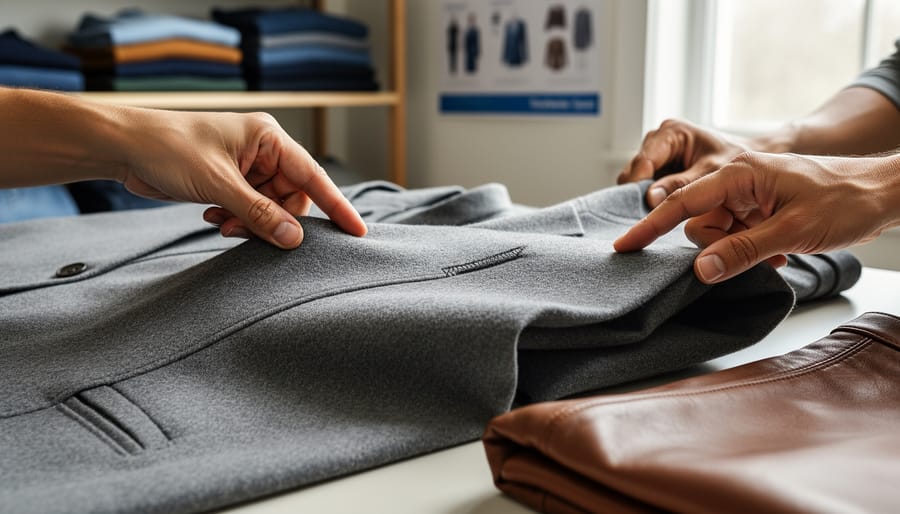
Quality is where sustainability and style meet. A piece built well lasts for decades, looks better as it ages, and never needs replacing. So once you’re past the front door and into the aisles, train your eye on construction before color or trend.
With clothing, start with the tag, then use your hands. Natural fibers like wool, cotton, linen, and silk tend to wear beautifully and wash up well. Turn the garment inside out and look at the seams. Small, even stitches and finished edges signal care. A proper lining, a heavy zipper that glides, and buttons sewn on with a bit of thread shank all point to a piece made to be worn for years.
Furniture rewards the same patient inspection. Pull out a drawer and look at the corners. Dovetail joints are a classic sign of craftsmanship, while stapled or glued corners usually aren’t. Knock on the wood, check the weight, and give the piece a gentle wobble to test the frame. Then lean in and sniff. Lingering smoke or mustiness can be stubborn, and tiny holes or fine sawdust can mean pests.
Here’s a quick way to sort the keepers from the pass-overs:
| Clothing | Furniture |
|---|---|
| Green flags: natural fibers, even stitching, full lining, smooth zippers | Green flags: solid wood, dovetail joints, sturdy frame, fresh-smelling |
| Red flags: pilling, stretched seams, stains under the arms, broken zippers | Red flags: wobbly legs, peeling veneer, strong odors, signs of pests |
Don’t be scared off by cosmetic flaws like a scuffed finish or a missing button. Those are easy fixes. Weak bones are the real dealbreaker.
After the Find: Cleaning, Refreshing and Styling
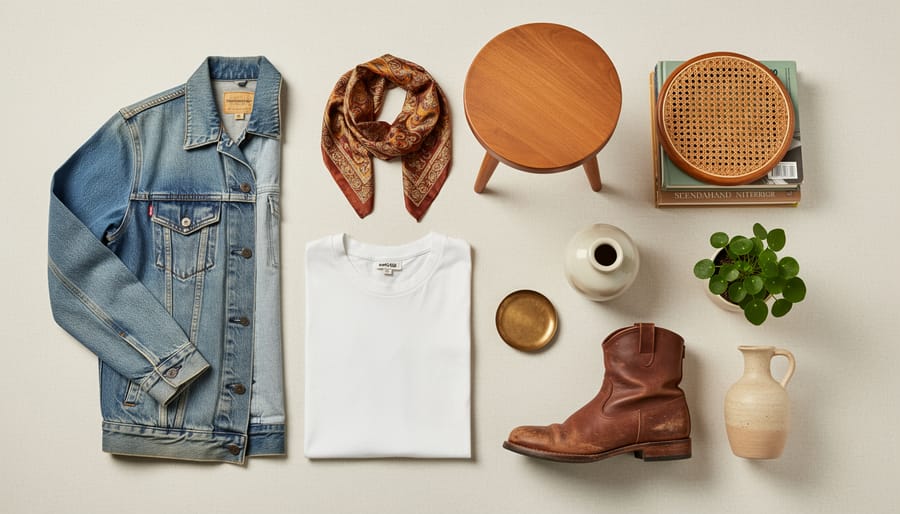
Bringing a thrifted piece home is where the magic really starts. For clothing, a gentle wash with mild detergent usually does the trick. Add a splash of white vinegar to the rinse to neutralize that thrift-store smell, then air-dry in the sun, which freshens fabric naturally. Delicate knits and vintage fabrics do best with a cool, hand wash.
Wood furniture deserves a little tenderness. Wipe it down with a damp cloth, then work in a bit of wax or oil to bring back the glow. Light scratches often vanish with a rub of walnut meat or a touch-up marker. Wobbly chair? A dab of wood glue and a clamp overnight can save it.
Upholstery is another easy win. If a sturdy frame has tired cushions, it’s worth learning how to choose the right cushion so comfort matches the piece’s good bones.
Styling is where it all comes together. Pair a weathered side table with a crisp new lamp, or layer a vintage knit over a modern outfit. Repeating a color or material across old and new makes the mix feel deliberate.
Bigger projects, like refinishing a dresser or reupholstering a chair, are a lovely chance to work with a local artisan or repair maker.
Getting the Most From Online Thrifting Communities
A community like r/thrifting works best when everyone brings a little care to it, and that starts with how you ask for help. If you’re hoping someone can identify a mystery vase, take your photos in good natural light and include the whole piece plus close-ups of any marks, stamps, or labels on the bottom or inside seam. Mention where you found it and roughly what you paid. That one bit of context can change the whole answer.
Kindness goes a long way, too. People are volunteering their time and knowledge, so a quick thank-you when someone helps is always appreciated. If a commenter points you toward a maker’s name or a helpful search term, share what you learned once you’ve followed up. Your update becomes useful for the next person who stumbles on the thread. And when you borrow a tip or a photo from someone else, give them credit. It’s a small gesture that keeps the community feeling generous.
Here’s the part worth holding onto lightly: every value estimate and identification guess you read online is an opinion, not an appraisal. Someone may be confident about a pottery mark and still be wrong, or recall a price that doesn’t match today’s market. Treat comments as helpful leads rather than final answers.
Before you buy something on the strength of a thread, or plan to resell it, do a bit of your own checking. Look up the maker’s mark in more than one reference, compare it with similar pieces that have actually sold (not just listed), and inspect the item in person for damage or repairs. For anything you suspect is truly valuable, a local appraiser or dealer can give you a grounded opinion.
Used this way, the community becomes a warm, knowledgeable companion on your thrifting adventures, while your own research and good eye keep the final decision where it belongs, with you.
Common Questions About Thrifting and r/thrifting

Curious but not sure where to start? Here are the questions newcomers ask most often.
Do I need a Reddit account to read r/thrifting?
Reddit generally lets you browse public communities without signing in, so you can scroll hauls and read comment threads freely. You’ll want an account only when you’d like to post your own finds, ask a question, or join a conversation.
How do I thrift safely?
Inspect every piece before you buy it, checking for stains, odors, loose seams, or signs of pests in furniture. Once it’s home, wash clothing on a gentle cycle and wipe down hard surfaces before it joins the rest of your space.
Does thrifting really save money?
It often does, especially for well-made pieces like solid wood furniture or natural-fiber clothing that would cost far more new. The savings disappear if you buy things simply because they’re cheap, so a short wish list keeps you honest.
How can I find quality secondhand furniture locally?
Start with community-run thrift shops, estate sales, and consignment stores, and visit often since stock changes quickly. Bring a tape measure and look for sturdy frames and dovetail joints, which signal a piece built to last.
A good rule of thumb is to treat advice from any online community, r/thrifting included, as a starting point. Cross-check what you learn with your own eyes and a little research, and you’ll shop with more confidence each time you step through the door.
There’s a particular kind of magic in the hunt. You walk into a thrift store with no plan beyond curiosity, and somewhere between the mismatched mugs and the crowded coat racks, something catches your eye. A well-made wool blazer. A little oak side table with honest, sturdy joints. That moment of recognition is what keeps thrifters coming back, and it’s even better when you’ve got a whole community of fellow hunters in your corner.
The beauty of learning from other thrifters is that nobody starts as an expert. Every confident shopper once squinted at a maker’s mark and wondered what it meant. Someone shared what they knew, and now you can do the same for the next person.
So take one small step this week. Browse the community for a few minutes and see what other people are finding. Stop by a local shop on your next free afternoon. Or pick up a single piece, give it a gentle clean, and let it settle into your space.
Every secondhand item you bring home is part of a home that feels like yours: layered, lived-in, and kind to the world around it. Go find your next favorite thing. It’s probably waiting on a shelf right now.