Handcrafted home accessories transform living spaces into meaningful sanctuaries that reflect your values and story. Unlike mass-produced decor, these thoughtfully made pieces carry the fingerprints of skilled artisans, bringing warmth, character, and a slower pace of making into rooms that might otherwise feel impersonal. When you choose a hand-thrown ceramic vase, a woven wall hanging, or a wooden cutting board shaped from reclaimed timber, you’re making a decision that extends beyond aesthetics. You’re supporting small-scale makers, reducing the environmental toll of factory production, and bringing objects into your home that were created with intention rather than churned out on an assembly line.
The beauty of handcrafted accessories lies in their imperfections. A slight variation in glaze, an organic texture, the subtle differences between two “matching” pieces, these qualities give handmade items soul. They also serve a practical purpose: well-made artisan goods often outlast their factory counterparts, becoming heirlooms rather than trends you’ll toss in a year. Whether you’re drawn to the earthy tones of natural materials, the vibrant energy of hand-dyed textiles, or the clean lines of minimalist pottery, handcrafted pieces offer something mass production never can: connection. Connection to the maker, to sustainable practices, and to a home that feels genuinely yours.
The Soul Behind Handcrafted Accessories
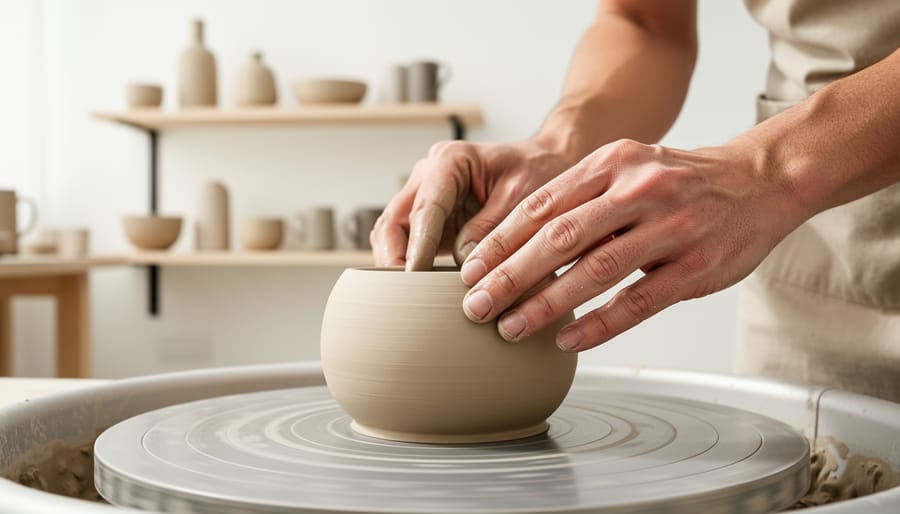
When you pick up a handcrafted ceramic bowl, you’re holding something fundamentally different from its mass-produced cousin. The rim might be slightly irregular. The glaze pools differently in each curve. These aren’t flaws, they’re fingerprints of the person who shaped that clay on their wheel.
Every handcrafted accessory begins as a deliberate choice by a maker. A weaver in Vermont selects specific wool colors for a wall hanging because those shades reminded her of autumn in the mountains. A woodworker in Oregon chooses figured walnut for serving boards, knowing exactly how that grain will respond to his tools. This intentionality flows through the entire creation process, making each piece a small capsule of someone’s expertise and aesthetic vision.
The difference shows in unexpected ways. Machine-made items optimize for perfect uniformity and speed. Artisans optimize for beauty, function, and the satisfaction of work done skillfully. That potter throwing your vase has thrown thousands before it, developing an intuitive sense of wall thickness and curve that no factory mold can replicate. The basket weaver’s hands know tension and pattern without conscious thought, creating strength through technique passed down through generations.
This human element creates what mass production cannot: character. Your hand-thrown mug has subtle variations in thickness that make it uniquely comfortable in your grip. That woven throw carries the rhythm of the loom and the weaver’s particular tension. Even pieces from the same artisan’s hands differ slightly, because human creation is responsive, adaptive, alive in ways automated production isn’t.
Beyond the object itself, you’re connecting to a specific person’s livelihood and passion. When you know your cutting board came from a maker who sustainably sources local hardwoods and has been perfecting edge-grain construction for fifteen years, that wooden rectangle becomes more than kitchen equipment. It becomes a collaboration between their skill and your daily life.
The Environmental Case for Choosing Handcrafted
Every purchase we make casts a vote for the kind of world we want to live in, and choosing handcrafted accessories means voting for a lighter environmental footprint. When an artisan creates a ceramic bowl in their local studio, the production chain might span a few miles. Compare that to a factory-made equivalent that travels thousands of miles through multiple distribution centers, and the carbon difference becomes stark.
Small-scale production inherently generates less waste. Artisans typically work with carefully measured materials, adjusting techniques in real time to minimize scraps. There’s no overproduction buffer, no massive unsold inventory heading to landfills. Research on waste generation rates shows that manufacturing facilities produce significantly higher waste volumes per unit compared to individual craft workshops, where makers have direct control over every cut, pour, and stitch.
The materials themselves tell another sustainability story. Artisans frequently work with reclaimed wood, locally sourced clay, natural fibers, and non-toxic finishes because these materials connect them to place and tradition. They’re not optimizing for cheapest global supply chains. A woodworker in Vermont uses maple from nearby forests; a ceramicist in New Mexico sources clay from regional deposits. This regional focus means fewer extraction sites, shorter transport distances, and materials chosen for their inherent qualities rather than their bulk pricing.
Your money also travels differently when you buy handcrafted. The local business multiplier effect means that dollars spent with independent makers circulate through your community roughly three times before leaving, supporting other local businesses and creating resilient regional economies. That woven basket you purchase directly funds the weaver’s rent, materials from a local supplier, and eventually flows to the farmer’s market where they shop.
Perhaps most importantly, handcrafted accessories are made to last. An artisan’s reputation depends on durability, not planned obsolescence. That hand-thrown mug won’t chip after six months; that wooden cutting board will develop a patina your grandchildren might inherit. Longevity is the ultimate sustainability metric, and it’s built into every piece a maker stakes their name on.
Essential Handcrafted Accessories for Every Room
Living Spaces That Tell Your Story
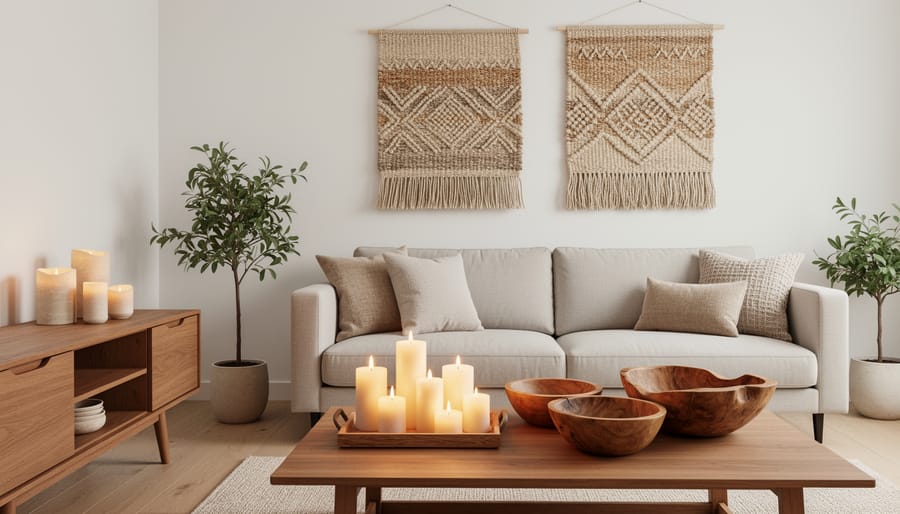
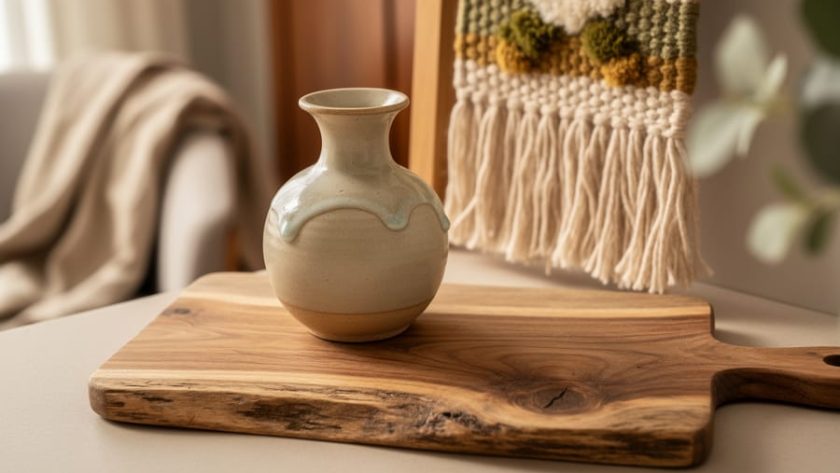
Living spaces anchor our homes, and handcrafted accessories give them depth that factory pieces never achieve. A chunky hand-knit throw draped over your sofa instantly softens hard lines while inviting touch, each irregular stitch reveals the maker’s rhythm. Ceramic vases in earth tones or hand-glazed finishes bring living greenery into conversation with human hands, their slight asymmetries catching light differently throughout the day.
- Wooden bowls for coffee tables, use them to corral remotes or display seasonal finds like pinecones and dried citrus
- Woven wall hangings above seating areas, choose natural fibers that add texture without visual weight
- Artisan candles in hand-poured vessels, their irregular surfaces and complex scents transform ordinary evenings into rituals
- Handcrafted pottery for plants, imperfect rims and organic glazes make greenery feel intentional, not decorative filler
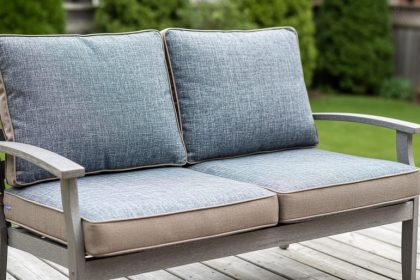
Layer these pieces rather than scattering them evenly. Group a wooden bowl with two smaller ceramic vessels on a side table. Pair a woven hanging with a throw in complementary natural tones. This clustering creates visual stories, small collections that feel curated, not purchased in a single afternoon. The same approach works whether you’re refreshing replacement cushions on indoor seating or considering outdoor cushion buying for covered patios, handcrafted accessories anchor both spaces with authenticity. Start with one statement piece, then build around it gradually as you discover makers whose aesthetic resonates with yours.
Kitchen and Dining Essentials with Character
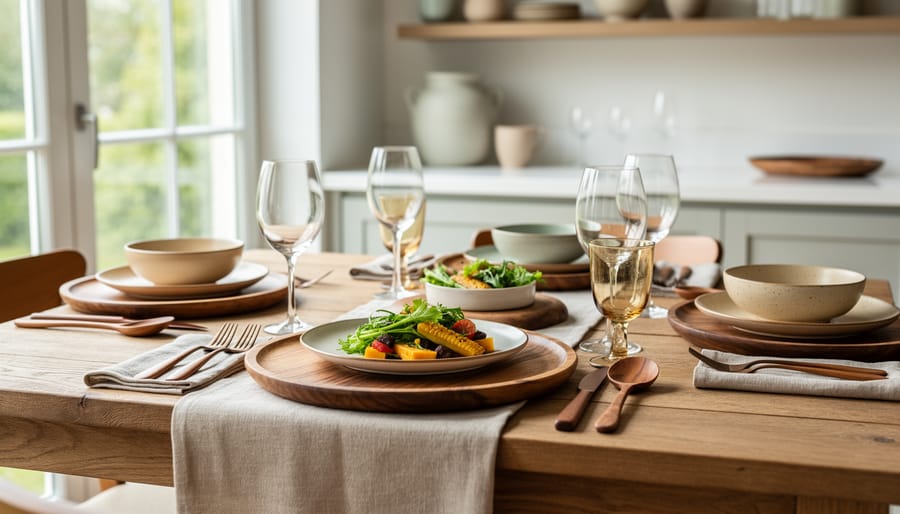
Your kitchen deserves more than factory uniformity. Handcrafted accessories transform daily cooking and dining into rituals that ground you in the present moment, connecting you to the makers who shaped each piece with intention.
Start with cutting boards that double as serving platters. A walnut board hand-finished with food-safe oil becomes a centerpiece when you arrange cheese or present fresh bread. Look for pieces where the grain pattern tells the tree’s story, no two boards share the same character. These surfaces age beautifully, developing a warm patina that reveals years of shared meals.
Pottery dinnerware brings irregular, human beauty to your table. Hand-thrown plates and bowls carry subtle variations in glaze pooling and rim thickness that make each place setting unique. The weight feels substantial in your hands, slowing the pace of eating and adding ceremony to weeknight dinners. Choose neutral earth tones that complement any tablecloth or embrace bold glazes that become conversation starters.
Hand-blown glassware catches light differently than machine-made alternatives. Tumblers with tiny air bubbles or stemware with organic variations in thickness create visual interest while serving their function. These pieces remind you that imperfection holds its own elegance.
Finish with artisan textiles, linen napkins with hand-rolled edges or cotton table runners dyed with natural pigments. These washable layers introduce texture and color while supporting traditional weaving techniques. They soften hard surfaces and invite lingering over coffee long after plates are cleared.
Bedroom Retreats Through Artisan Touches
Your bedroom should be your most personal sanctuary, and handcrafted accessories create layers of calm that mass-produced items simply can’t match. A handwoven blanket draped across your bed becomes both texture and temperature control, with natural fibers like organic cotton or merino wool that regulate body heat throughout the night. The irregular weave patterns and subtle color variations tell the story of the artisan’s hands.
Ceramic lamps cast softer, warmer light than factory fixtures. Look for pieces with hand-carved shades or vessels thrown on a potter’s wheel, where the clay’s natural variations create unique light diffusion. Place one on your nightstand to transform harsh overhead lighting into a gentle glow.
Hand-dyed linens in plant-based indigos, madder root reds, or avocado pit pinks bring organic color that shifts slightly with each washing, aging beautifully rather than fading cheaply. These pigments contain none of the synthetic chemicals found in conventional bedding.
Natural fiber baskets organize your space without visual clutter. Seagrass, jute, or sweetgrass woven baskets hold extra blankets, books, or clothing while adding sculptural interest. Their irregular shapes and earthy tones ground your room in nature rather than plastic storage solutions.
Bathroom Sanctuaries with Handcrafted Details
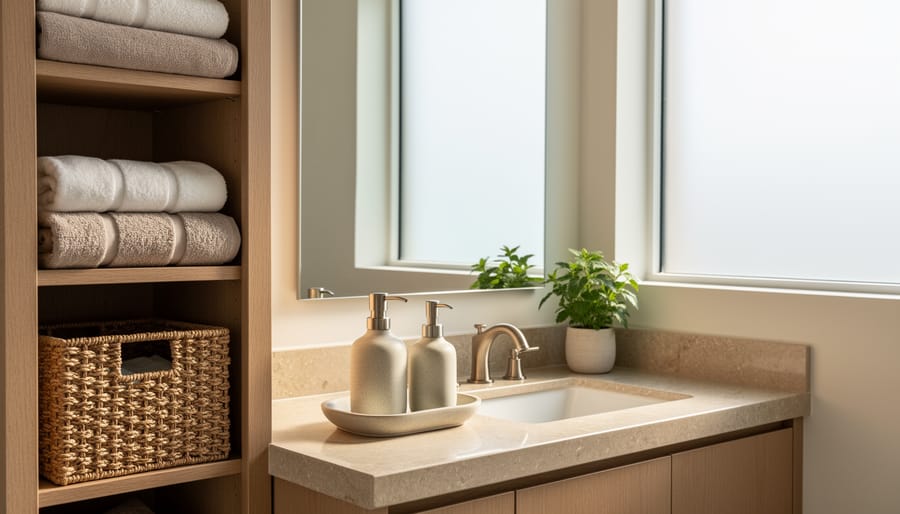
Your bathroom deserves the same artisan attention as the rest of your home. Start with a hand-thrown soap dish in natural clay, the texture and organic form turn a functional piece into a small sculpture beside your sink. These handcrafted ceramics absorb excess water naturally, extending the life of your artisan soaps while adding earthy elegance.
Storage jars crafted by local potters bring order without sacrificing warmth. Use them for cotton swabs, bath salts, or homemade sugar scrubs. Each piece carries slight variations in glaze and shape that make your countertop feel curated rather than sterile.
Woven seagrass or jute baskets solve the towel storage challenge beautifully. Unlike plastic bins, these natural fiber pieces breathe, preventing mustiness while softening hard bathroom surfaces. They age gracefully, developing character that plastic never could.
Replace mass-produced towels with those woven by textile artisans using organic cotton or linen. The difference in texture is immediate, thicker, more absorbent, and free from the chemical treatments common in commercial towels. These pieces transform your daily shower into a spa-like ritual, reminding you that even the smallest moments deserve thoughtful beauty.
How to Source Authentic Handcrafted Accessories
Finding authentic handcrafted accessories requires a mix of curiosity, patience, and knowing where to look. The good news? Genuine artisan pieces are more accessible than ever, whether you’re drawn to local maker markets or prefer browsing from your couch.
Start with local craft fairs and artisan markets in your area. These events let you meet makers directly, ask about their process, and see the subtle variations that distinguish handmade from factory-produced. Many cities host monthly or seasonal markets where potters, woodworkers, and fiber artists sell their work. You’ll often find pieces nowhere else available, and the conversations with creators add depth to what you bring home.
Online platforms have opened doors to artisans worldwide. Sites like Etsy, Made Trade, and The Citizenry connect you with individual makers and small studios, though you’ll need to look beyond marketing language. When shopping online, follow this vetting process:
- Read the shop’s about section thoroughly, genuine artisans explain their techniques, materials, and often show their workspace or hands at work.
- Look for process photos in listings that reveal the making stages, not just polished final shots.
- Check reviews mentioning craftsmanship details, shipping times that suggest made-to-order production, and repeat customers.
- Message the maker with specific questions about materials, finishing methods, or customization, responsive, knowledgeable answers indicate authentic craft.
- Examine pricing against materials and time investment; suspiciously low prices often signal mass production masquerading as handmade.
Studio visits and open house events offer the richest experience. Many ceramicists, woodturners, and textile artists welcome visitors by appointment or during scheduled showings. You’ll see works in progress, understand the skill involved, and often commission custom pieces. Just as you’d carefully choose the right cushions for outdoor furniture, selecting handcrafted accessories benefits from seeing options in person when possible.
Don’t overlook Instagram and maker websites as discovery tools. Artisans regularly post work-in-progress content that reveals their authentic process. A store finder guide approach works here too, search hashtags for your region plus craft type to uncover local talent.
Trust your instincts. Authentic handcrafted pieces carry visible marks of the human hand: slight asymmetries, tool marks, glaze variations. These aren’t flaws but signatures of genuine craft.
Caring for Your Handcrafted Treasures
Your handcrafted pieces deserve care that honors the artisan’s skill and extends their life. Proper maintenance isn’t just about preservation, it’s a sustainable practice that keeps beautiful objects out of landfills.
Ceramics and Pottery
Hand-thrown pieces often have unglazed portions or delicate glazes that need gentle handling. Wash by hand with mild soap and warm water, avoiding abrasive scrubbers that can scratch surfaces. Let pieces air-dry completely before storing, especially porous unglazed clay that can harbor moisture. Most handcrafted ceramics aren’t microwave or dishwasher-safe unless the maker specifically confirms otherwise.
Wood Items
Wooden bowls, cutting boards, and utensils thrive with regular oiling. Use food-safe mineral oil or beeswax blends monthly to prevent drying and cracking. Never soak wood in water or put it in the dishwasher. Wipe clean promptly after use and let it dry standing upright. Deep scratches can often be sanded out with fine-grit sandpaper, then re-oiled.
Natural Fibers
Woven baskets, throws, and outdoor furniture accessories made from cotton, wool, or jute benefit from gentle spot-cleaning rather than frequent washing. Shake out dust regularly. For deeper cleaning, hand-wash in cool water with gentle detergent, then air-dry completely. Avoid direct sunlight during drying, which can fade natural dyes.
Metal Pieces
Handcrafted copper, brass, and iron develop patina over time, a desirable characteristic that tells their story. If you prefer shine, use appropriate metal polish sparingly. For everyday care, wipe with a soft, dry cloth. Keep metals away from excessive moisture to prevent tarnishing or rust, especially with pieces that aren’t sealed.
Transforming your home with handcrafted accessories isn’t about filling every surface. It’s about choosing pieces that resonate with your values and bring genuine joy each time you see them. Start with a single artisan-made item that speaks to you, a ceramic bowl, a woven wall hanging, or hand-thrown mug. Notice how it changes the energy of your space.
As you build your collection thoughtfully, you’re doing more than decorating. You’re supporting makers who pour skill and intention into their work, reducing your environmental footprint, and creating a home that tells your unique story. Each handcrafted piece becomes a small act of resistance against throwaway culture, a tangible connection to human creativity, and a daily reminder of the beauty found in things made with care rather than speed.